Kateryna Lysovenko
In Between
IN IN BETWEEN, KATERYNA LYSOVENKO FOLLOWS THE DEAD FROM A MASS GRAVE TO AN UPRISING, TURNING THE UNDERWORLD INTO A PLACE OF TRANSFORMATION AND RESISTANCE. SHE REIMAGINES THE APOCALYPSE NOT AS THE END OF THE WORLD, BUT AS THE POSSIBILITY OF JUSTICE.
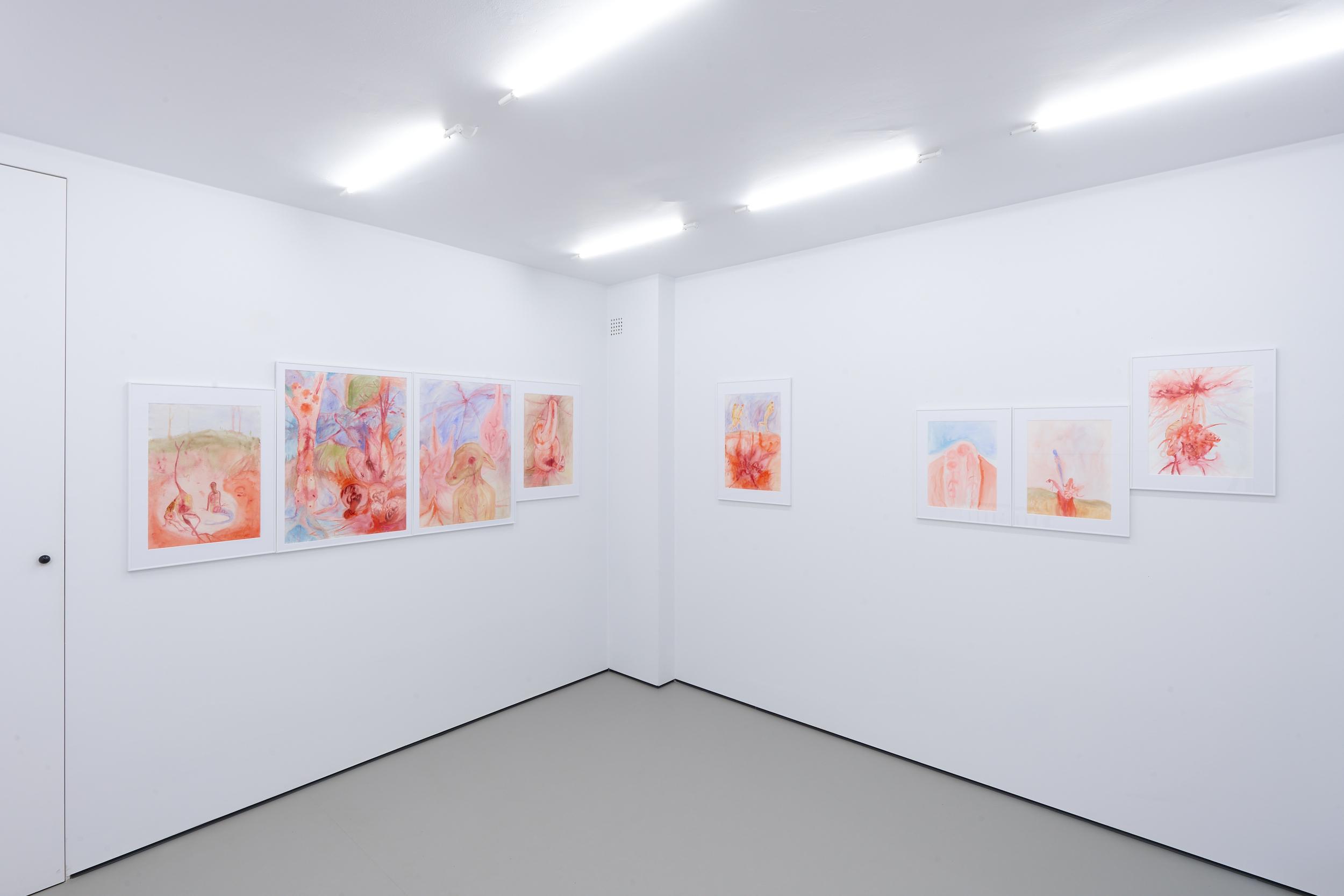
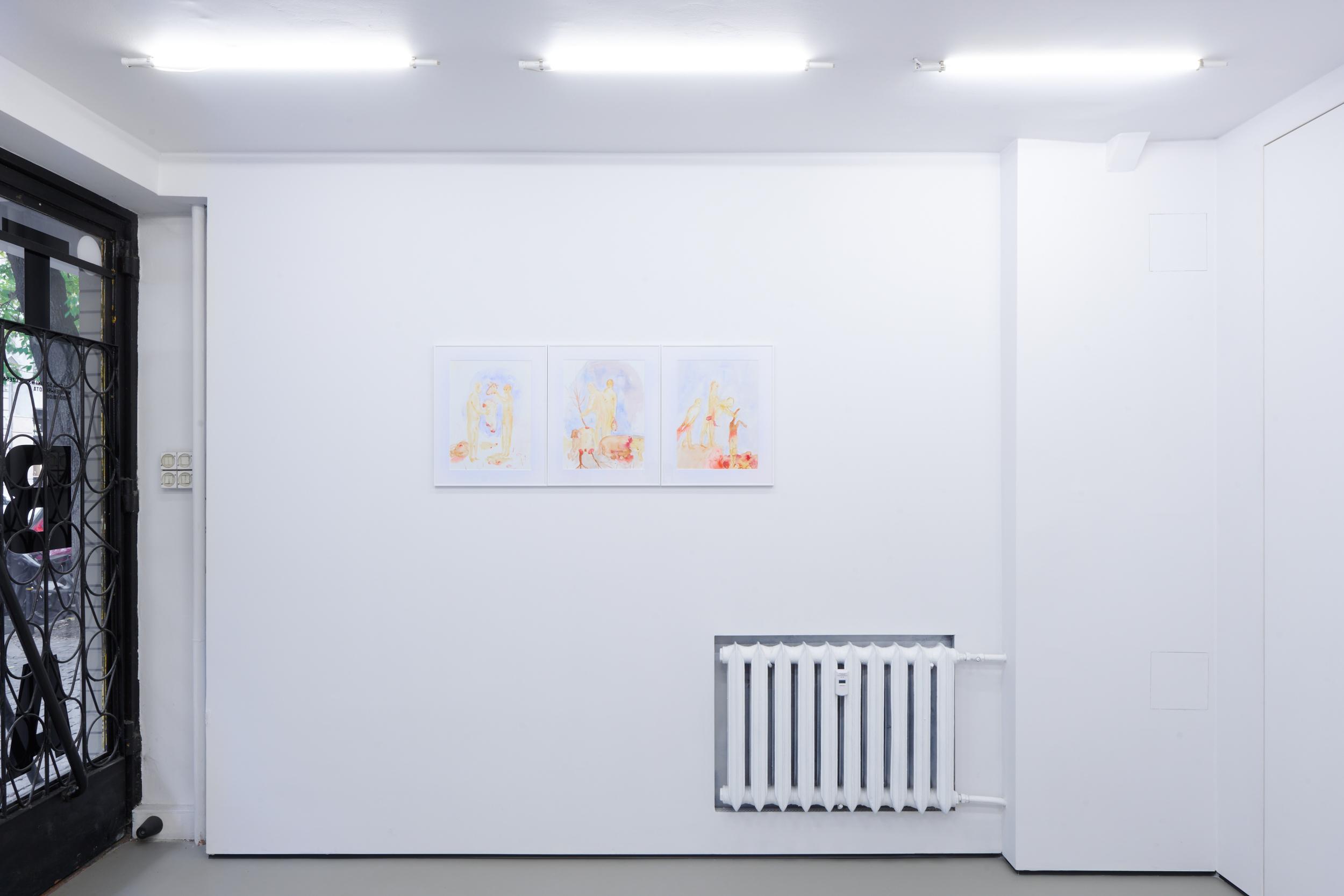
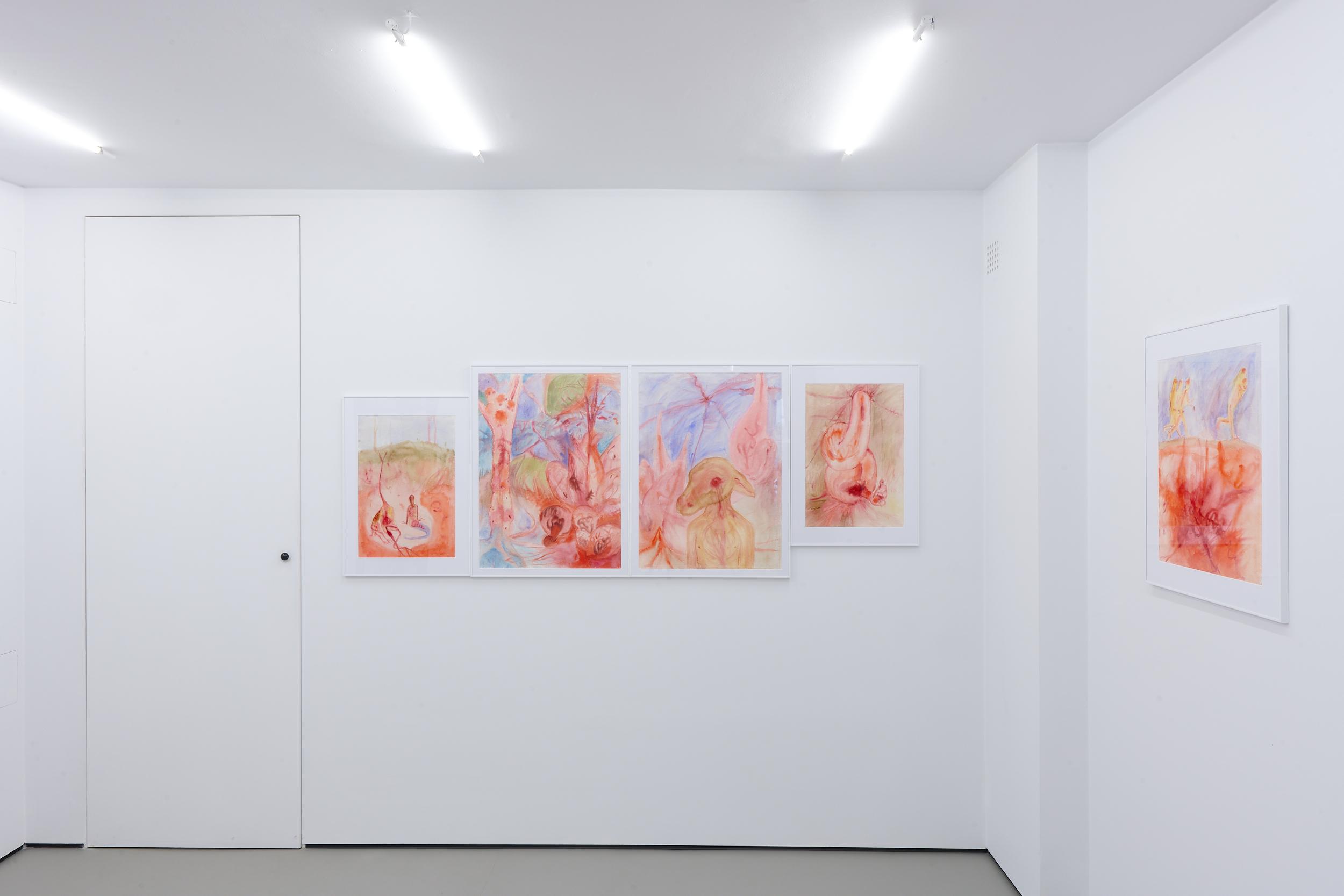
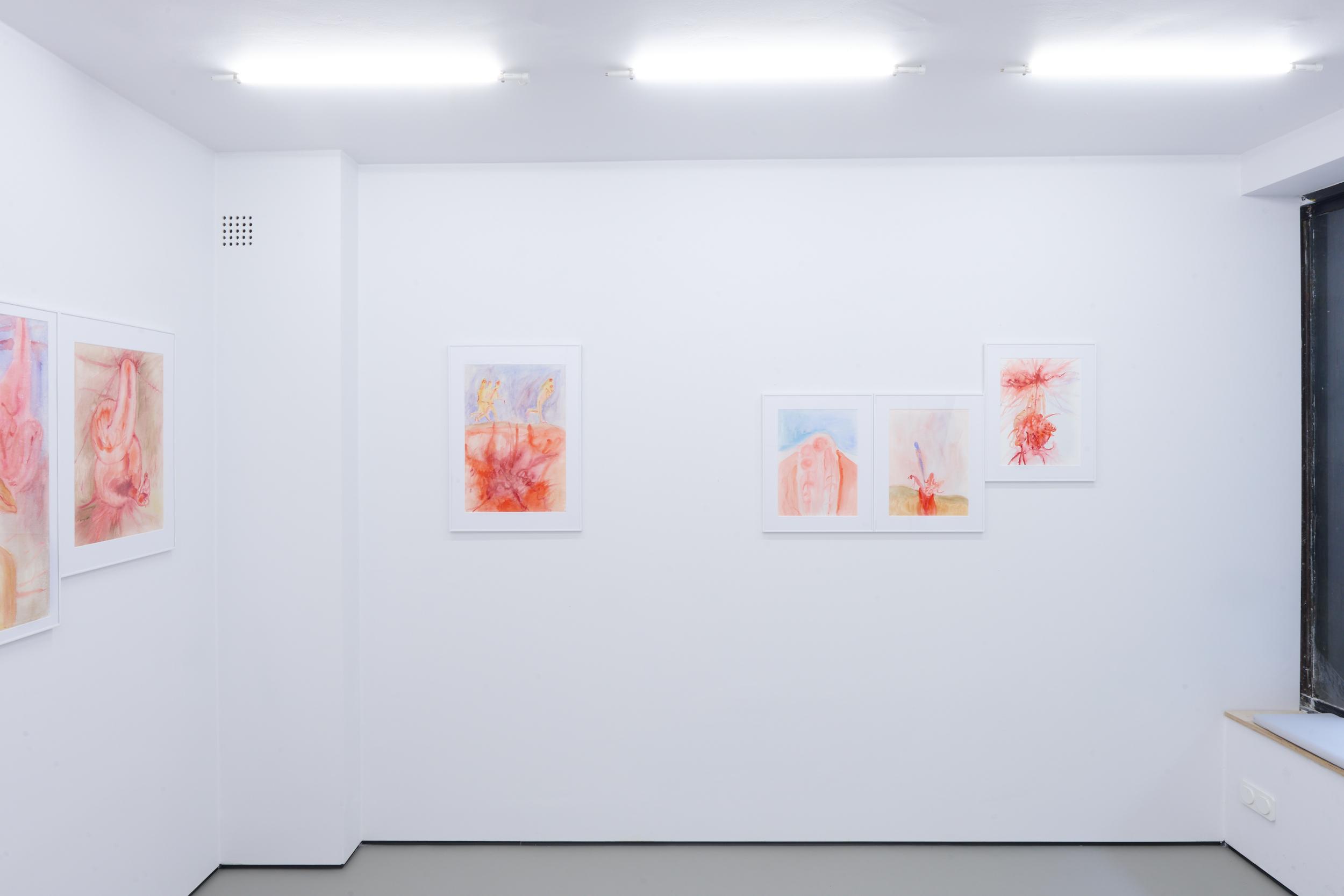
THIS SECOND SOLO SHOW AT TBA UNFOLDS THROUGH ELEVEN NEW WATERCOLOURS, EXHIBITED FOR THE FIRST TIME, EXPLORING THE SPACE BETWEEN LIFE AND DEATH, VIOLENCE AND ITS ANSWER.
18/09–31/10 2026
TUE–SAT, 12–6 PM
Opening Reception
17/09, 3–7 PM
Wilcza 62
Warsaw, Poland
Photo
Kuba Rodziewicz
Where is hell? In most of the images we have inherited, it lies below, under the feet of the living. Kateryna Lysovenko turns that map upside down. The eleven watercolours in In Between tell a single story, step by step, and it begins on the surface of the earth.
It begins after a killing. People gather around the dead and abuse their bodies. Where heads and limbs were cut off, they attach animal heads and branches, as if performing a sacrifice. There is no myth here and no religion to soften it. The violence looks real because something like it is happening now. When it is over, the bodies are thrown into a pit.
Under the ground, the dead wake up. Slowly they grow together with what was forced onto them, until flesh, animal heads and branches become one body. These are the hybrid beings that live throughout Lysovenko's work. The world down there is no place of punishment. It is quieter and safer than the world above. At this point the story leaves reality behind. It isn't running from the horror; reality as it is can barely be endured. Still, it never loses sight of what happened. So many people vanish into that horror, and Lysovenko refuses to accept their disappearance.
Above, the violence goes on. Men chase someone, perhaps a woman. Below, the rage of the dead grows until their bodies can no longer contain it. The underworld swells and bursts, and the dead come out.
Lysovenko takes this moment from the Book of Revelation, where creatures from hell rise to the surface. For her it isn't the end of the world but an uprising, the killed turning against those who killed them. The story ends with a figure seated on a dragon.
In between is the state these works live in: between the living and the dead, between what happened and what can be borne, between violence and its answer. From here, the apocalypse doesn't look like a catastrophe. It looks closer to justice.
KATERYNA LYSOVENKO
Born 1989 in Kyiv, Ukraine, currently lives in Vienna. She studied at the National Academy of Fine Arts and Architecture in Kyiv from 2013 to 2018. Kateryna primarily works with monumental painting, drawing, and text, often referencing mythological themes to reflect on past and present human tragedies. Body, materiality, and motherhood are important motifs in her art.
Kateryna has recently exhibited at the Biennale Matter of Art (2024) in Prague and at From Ukraine: Dare to Dream, a collateral event of the 60th Venice Biennale (2024). Her art is part of several major collections, including the Museum of Modern Art in Warsaw, the Ludwig Museum in Budapest, the Ukrainian Museum of Contemporary Art in Kyiv, and the Neue Galerie in Graz, as well as private collections around the world.